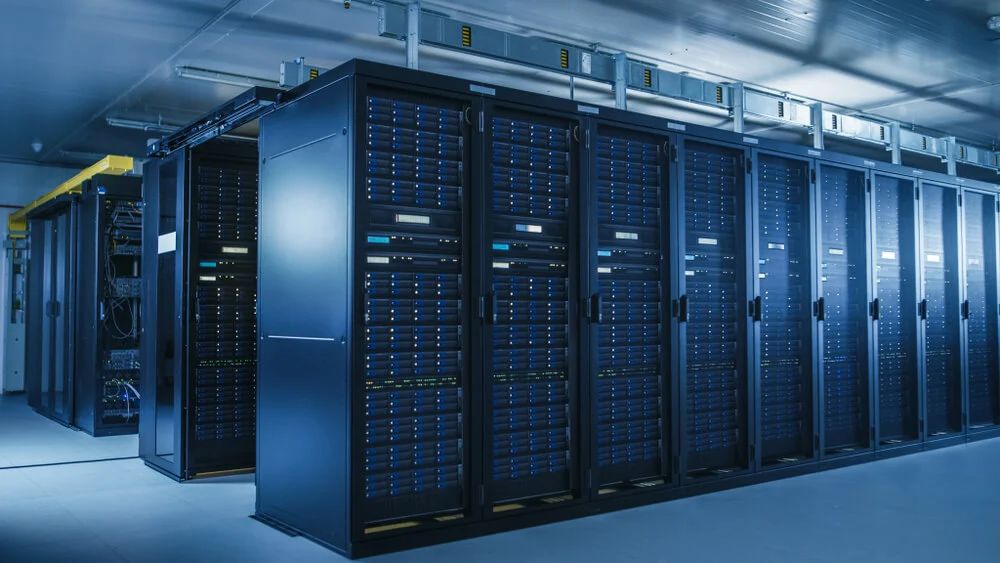
The right AI infrastructure starts with the model you will run and the users you will serve. RAICOSOL sizes CPU, GPU, memory, storage, network, server and rack as one system, so capital goes into capacity you will actually use.
Six decisions set the cost, speed and life of an AI cluster.
Peak FLOPS rarely decide the outcome. A GPU waiting on a slow CPU, a saturated network or an overheated rack is an expensive idle asset. Each layer has to be sized against the others.
CPU · host
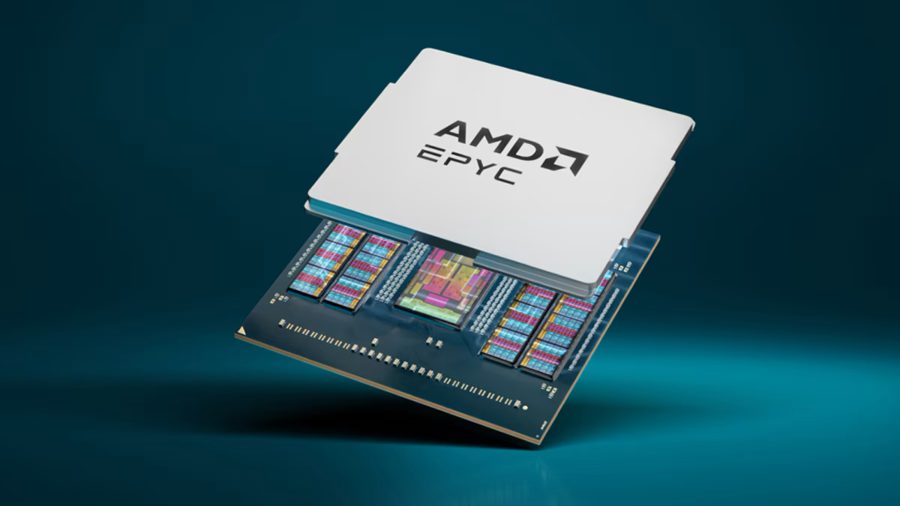
CPU
The host feeds the accelerators: data loading, tokenization, orchestration and pre- and post-processing.
Cores and memory channels sized per GPU, validated under load
NUMA-aware placement of GPUs, NICs and drives
CPU-only inference for small models and spiky traffic
Accelerator
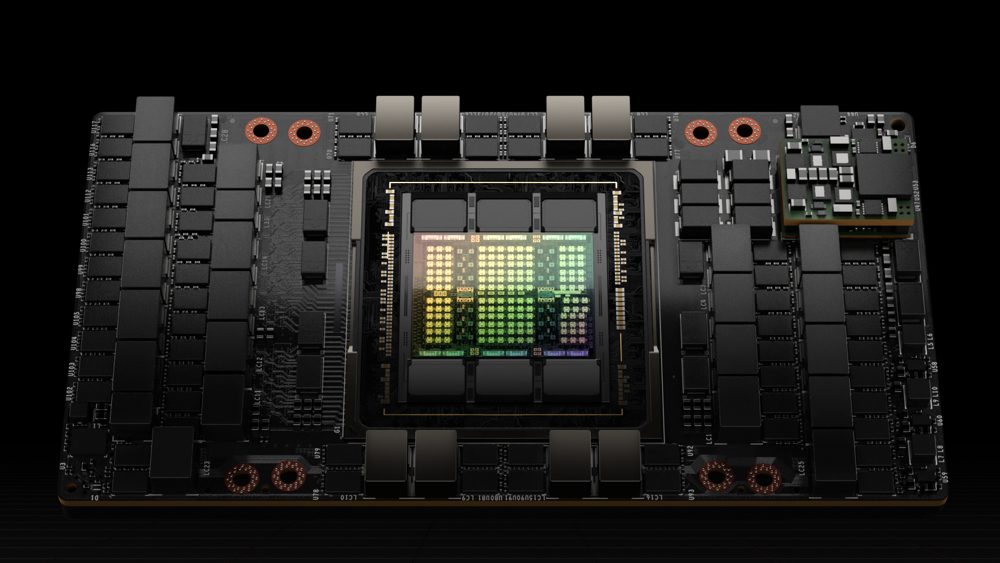
GPU
Memory capacity and bandwidth decide which models fit and how fast tokens stream, often more than raw compute.
HBM per GPU matched to model size and context length
FP8 / FP4 support for efficient inference
PCIe cards vs. OAM / SXM modules by density and power
Data path
Storage
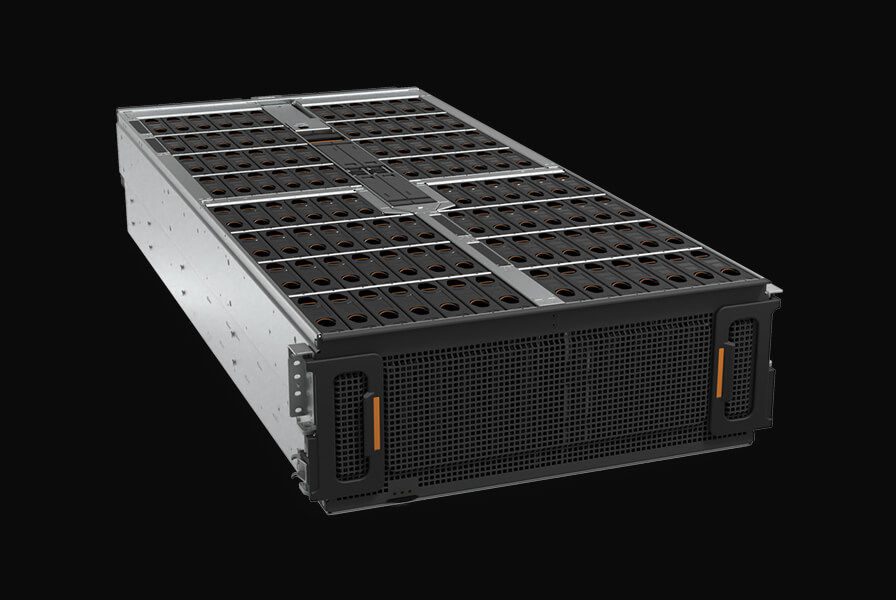
Training checkpoints and dataset reads must keep pace with the GPUs, or utilization collapses.
Local NVMe cache per node for hot data
Parallel file or object tier for datasets and checkpoints
Storage bandwidth planned with the CPU ratio, not after
Fabric
Network
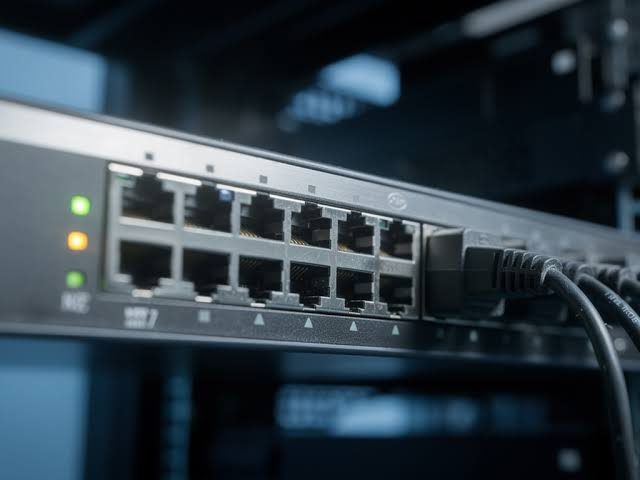
Three networks, three jobs: scale-up inside the server, scale-out across the cluster, and scale-across between sites.
Rail-optimized 400G / 800G scale-out fabric
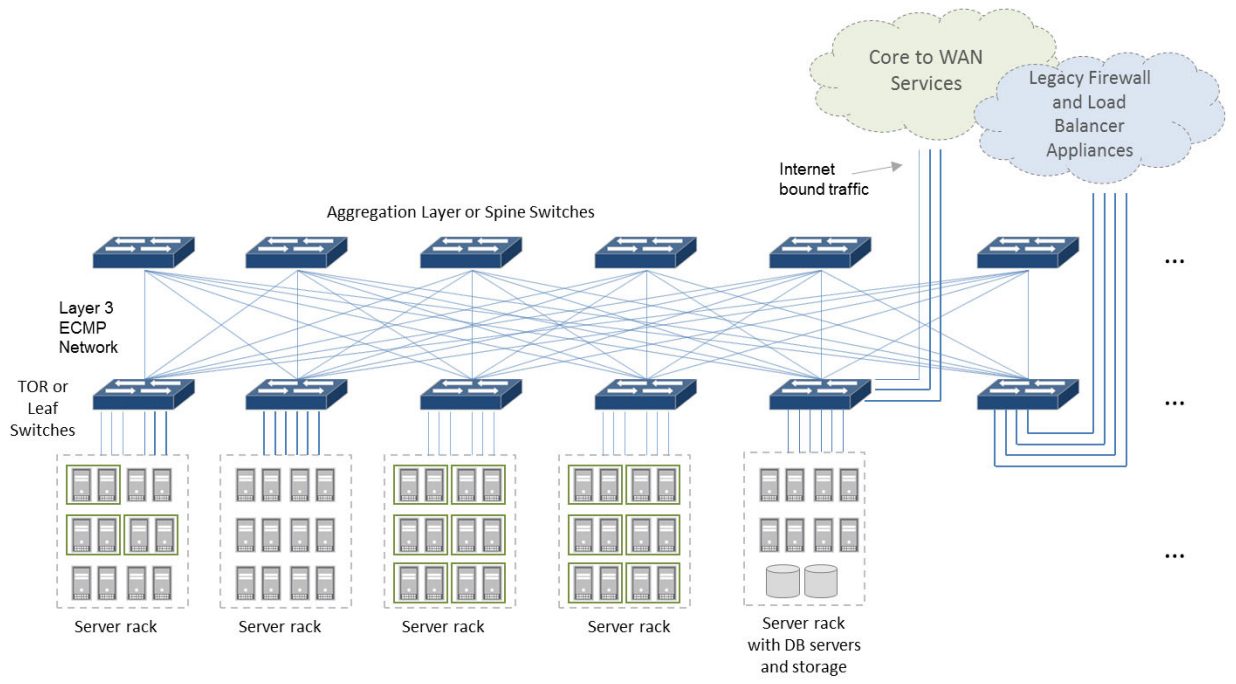
Top-of-rack and spine design with headroom
Separate front-end, storage and management networks
Platform
Server
The chassis sets GPU count, PCIe topology, cooling method and serviceability for the life of the asset.
8-GPU nodes vs. PCIe servers for mixed workloads
Balanced PCIe switch topology, GPU-to-NIC ratio of 1:1
OEM and ODM options sourced through authorized channels
Facility
Rack
Power and cooling per rack now decide where a cluster can live, and how much of it fits.
kW-per-rack budget from the GPU's board power up
Air vs. direct-to-chip liquid cooling
Power distribution, cabling and floor-load planning
Inside an AI server
Balance beats peak specs.
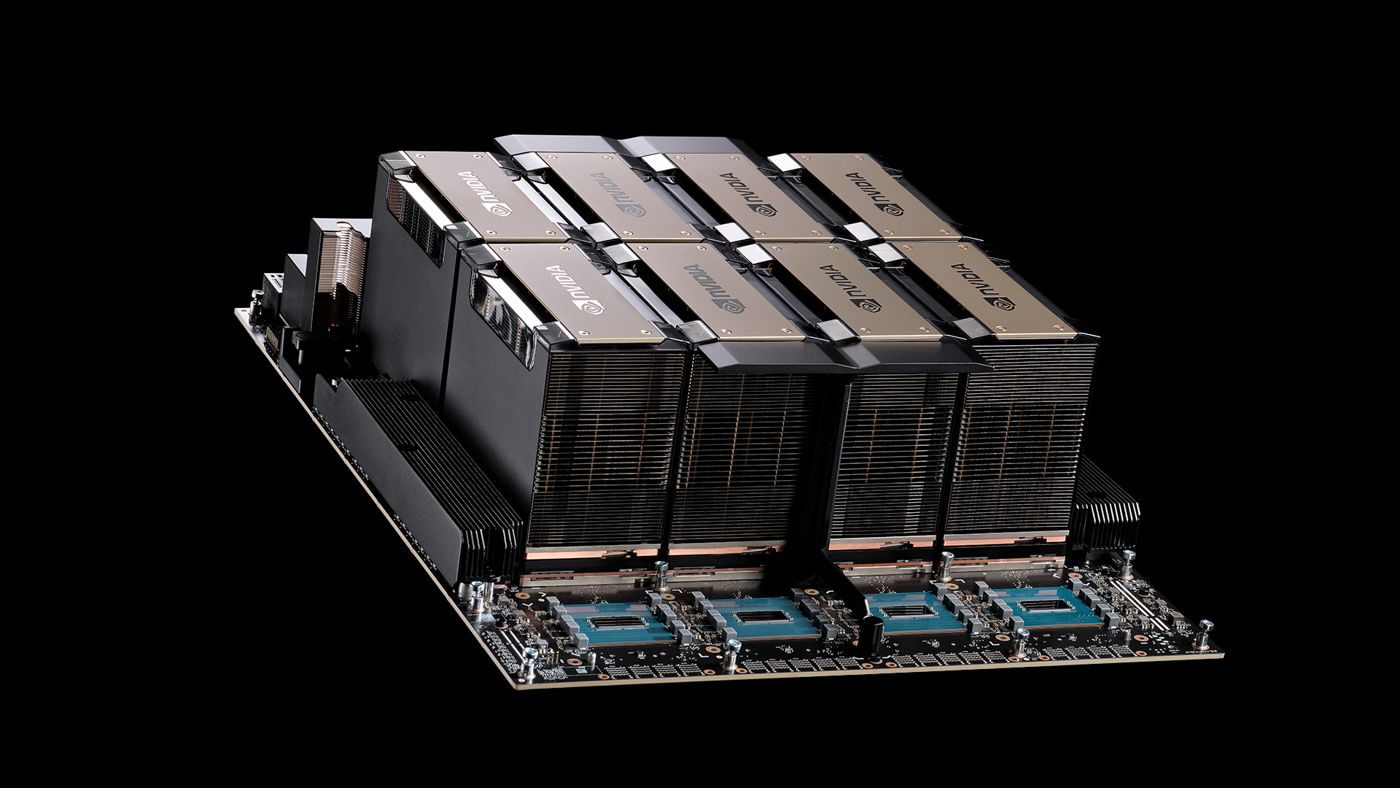
A typical 8-GPU node pairs two host CPUs with eight accelerators, one high-speed network port per GPU, and local NVMe. The bottleneck moves to whichever path was undersized.
There is no universal CPU-to-GPU ratio. We profile the input pipeline and the p95 latency of your service, then size cores, memory and storage to match.
Illustrative 8-GPU node. One network port per GPU and NUMA-local storage keep every accelerator fed.
CPU or GPU?
Use each processor for the work it does best.
CPUs excel at serial, branching work and fast responses to unpredictable requests. GPUs run thousands of lightweight threads at once, which is what the matrix math in deep learning needs. Most production systems use both.
Control & serial work
Where CPUs fit
Orchestration, data ingestion and preprocessing
Inference for small models or bursty, unpredictable traffic
Fine-tuning some domain-specific models
Databases, web services and the application layer
Parallel math
Where GPUs fit
Training and fine-tuning large language models
High-throughput, low-latency LLM inference
Image, video and simulation workloads
Drug discovery, numerical optimization, scientific computing
Purpose-built
Specialized silicon
LPUs for very fast language inference
NPUs for low-power edge and device AI
TPUs for large-scale tensor workloads
DPUs and SmartNICs to offload networking and storage
Buy, lease or rent?
A GPU generation stays competitive for roughly 18 months, while servers are usually depreciated over five years. We model ownership, leasing and cloud capacity side by side, including egress, support and exit costs, before you commit.
Start from the workload
Training, fine-tuning and inference need different hardware.
Training is bursty and bound by memory bandwidth and interconnect. Inference is continuous, latency-sensitive and judged on throughput per dollar and proximity to users.
Workload-to-architecture guide
Workload
What limits it
Architecture we typically recommend
Foundation model training
HBM bandwidth, GPU-to-GPU and cluster interconnect
High-HBM GPUs so the model fits in fewer devices; FP8 / FP4 serving
Enterprise inference in existing racks
Rack power, air cooling, standard servers
PCIe accelerators (MI350P, RTX PRO 6000) in air-cooled servers
Vision, video and graphics
Mixed compute and graphics, media engines
RTX PRO 6000-class PCIe GPUs
Scientific and HPC
FP64 throughput, memory bandwidth
FP64-strong parts (MI325X, MI355X); verify FP64 before choosing B300
Accelerator comparison
AMD Instinct and NVIDIA, side by side.
Published per-GPU specifications for the accelerators we deploy most often. Compute figures are dense (without sparsity) so the two vendors compare fairly.
Memory per GPU
GB of on-package memory. More memory means larger models on fewer GPUs.
FP8 compute per GPU (dense)
PFLOPS. The main precision for modern training and inference.
AMD Instinct
MI300 / MI350 series · CDNA 3 & CDNA 4
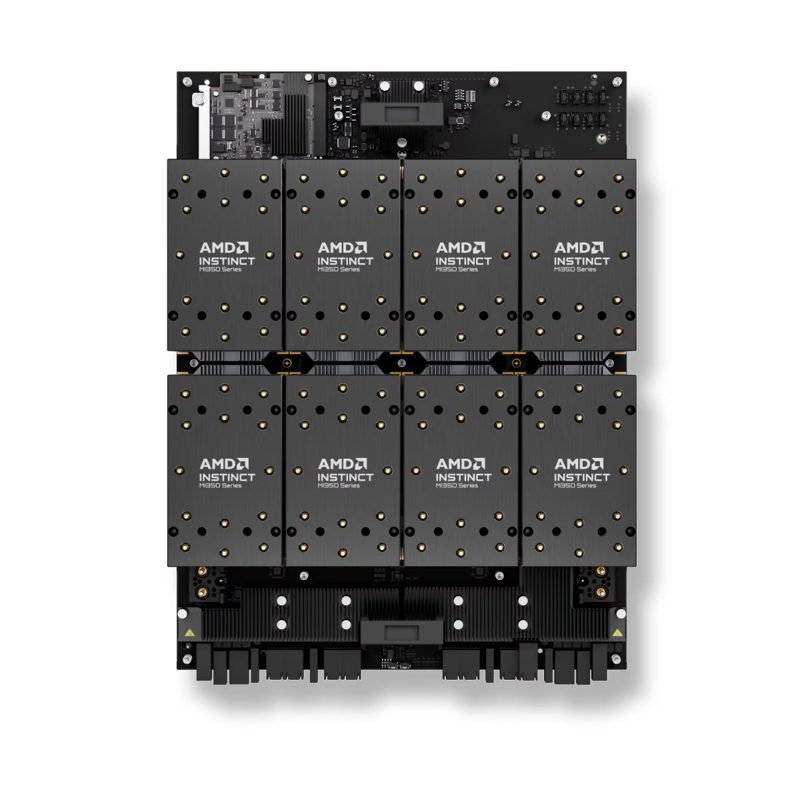
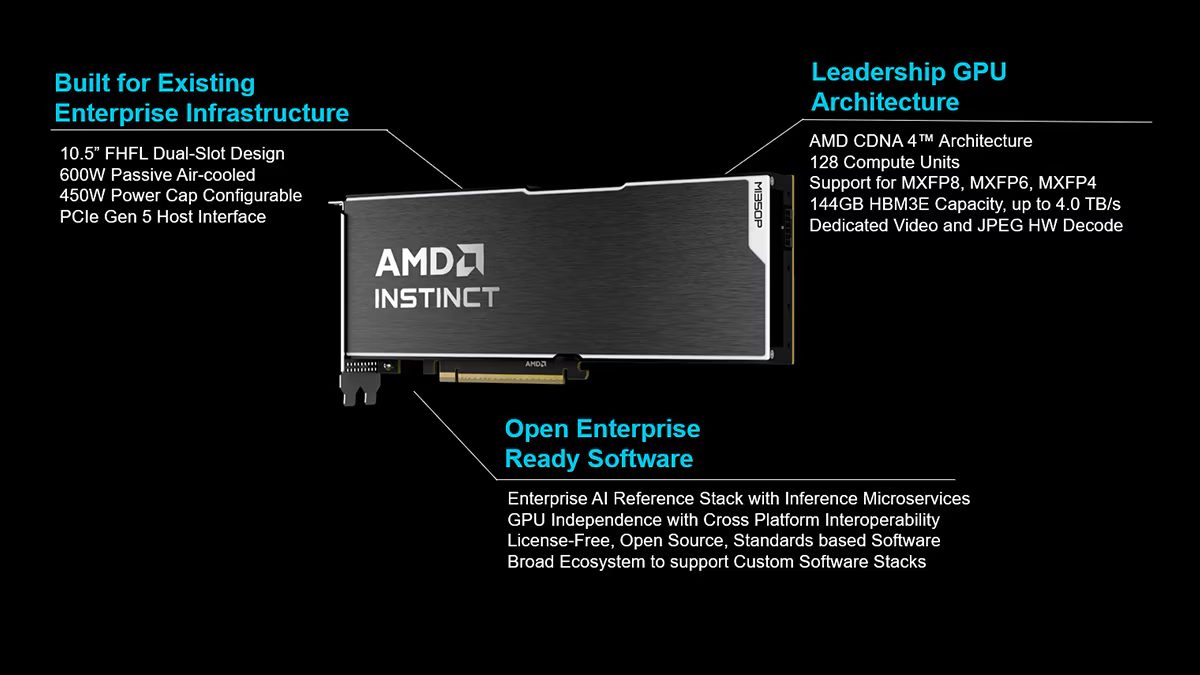
MI350PCDNA 4 in a standard PCIe card. 144 GB HBM3E, air-cooled, up to eight per server: a drop-in upgrade for existing racks.
MI355XThe flagship: 288 GB HBM3E and 8 TB/s, with native FP6 and FP4 for high-density inference.
MI325X256 GB HBM3E with strong FP64 for HPC alongside AI, on a proven CDNA 3 platform.
AMD Instinct accelerators — per GPU
Specification
MI325X
MI350P
MI355X
Memory
256 GB HBM3E
144 GB HBM3E
288 GB HBM3E
Memory bandwidth
6 TB/s
4 TB/s
8 TB/s
FP8 (dense)
2.61 PFLOPS
2.3 PFLOPS
5 PFLOPS
FP4 (dense)
Not supported
4.6 PFLOPS
10.1 PFLOPS
FP64
81.7 TFLOPS
36 TFLOPS
78.6 TFLOPS
Board power
1,000 W
600 W (450 W cfg.)
1,400 W
Form factor
OAM module
PCIe 5.0 card, dual-slot, air-cooled
OAM module, liquid or air
GPU-to-GPU link
Infinity Fabric, 8 × 128 GB/s
PCIe (up to 8 per server)
Infinity Fabric, 7 × 153 GB/s
NVIDIA
Hopper & Blackwell
H200141 GB HBM3e on the mature Hopper platform, with the broadest software support today.
RTX PRO 600096 GB GDDR7 in a PCIe card for inference, graphics and video, with MIG partitioning.
B200Blackwell with 180 GB HBM3e, FP4, and NVLink at 1.8 TB/s per GPU.
B300Blackwell Ultra with 288 GB HBM3e and the highest FP4 throughput, with FP64 traded away.
NVIDIA data center GPUs — per GPU
Specification
H200
RTX PRO 6000
B200
B300
Memory
141 GB HBM3e
96 GB GDDR7
180 GB HBM3e
288 GB HBM3e
Memory bandwidth
4.8 TB/s
1.6 TB/s
8 TB/s
8 TB/s
FP8 (dense)
1.98 PFLOPS
1 PFLOPS*
4.5 PFLOPS
4.5 PFLOPS
FP4 (dense)
Not supported
2 PFLOPS*
9 PFLOPS
13.5 PFLOPS
FP64
34 TFLOPS
Not published
37 TFLOPS
1.25 TFLOPS
Board power
700 W
600 W
1,000 W
~1,100 W+
Form factor
SXM module
PCIe 5.0 card, dual-slot
SXM module
SXM module, liquid-cooled
GPU-to-GPU link
NVLink 900 GB/s
PCIe (no NVLink)
NVLink 1.8 TB/s
NVLink 1.8 TB/s
Figures are vendor-published peak theoretical values, per GPU, without sparsity. AMD FP4 uses MXFP4. NVIDIA HGX B200 / B300 values are the 8-GPU baseboard totals divided by eight; B300 has 288 GB nominal (about 270 GB usable). *RTX PRO 6000 FP8 and FP4 are estimated at half of NVIDIA's published figures, which we read as with sparsity. Board power for B300 varies by system vendor. Real-world throughput depends on the model, software stack and cluster design; we benchmark on your workload before you buy.
Spotlight · AMD Instinct MI350P
Enterprise AI in the racks you already have.
Most enterprises cannot rebuild a data hall for liquid-cooled GPU racks. The MI350P puts CDNA 4 and 144 GB of HBM3E on a standard dual-slot PCIe card, so generative and agentic AI can run in mainstream air-cooled servers, without a rack redesign.
Why we recommend it
Drop-in deployment. Full-height, full-length PCIe Gen 5 x16 card, passively cooled, up to eight per server.
Fits your power budget. 600 W board power, configurable down to 450 W where power or cooling is tight.
Large models, fewer cards. 144 GB HBM3E at 4 TB/s, plus native MXFP8, MXFP6 and MXFP4 for efficient inference.
Open, license-free software. The open-source AMD Enterprise AI reference stack, with inference microservices and Kubernetes integration.
Shared and secure. Up to four GPU partitions of 36 GB, with full-chip ECC.
144 GBHBM3E memory
4 TB/sMemory bandwidth
128Compute units · 512 matrix cores
2.3 PFFP8 peak (dense)
4.6 PFMXFP4 / MXFP6 peak
450–600 WConfigurable board power
Architecture
CDNA 4 on TSMC 3 nm and 6 nm: four compute dies of 32 CUs, 4 MB shared L2 and 128 MB AMD Infinity Cache, with a 4096-bit memory interface.
Software stack
AMD Enterprise AI reference stack with the GPU Operator for Kubernetes, AMD Inference Microservices for pre-validated LLM hosting, and day-0 support for leading models.
Enterprise assistants across sales, HR, legal and coding; retrieval and document AI; video and image pipelines with on-card media decode; drug discovery and materials science.
Specifications from AMD's MI350P product brochure and product page; performance figures are AMD estimates of peak theoretical values.
Open-weight models
Size the cluster for the models you will actually run.
Open-weight models such as Kimi, Gemma, Mistral, Qwen, Llama, GLM and DeepSeek now rival closed models for many enterprise tasks. You can run them on your own infrastructure, in your own jurisdiction, with predictable cost.
Most of the largest models use mixture-of-experts (MoE) designs: only a fraction of the parameters is active per token, but every parameter still has to sit in GPU memory. That makes memory capacity the first sizing question.
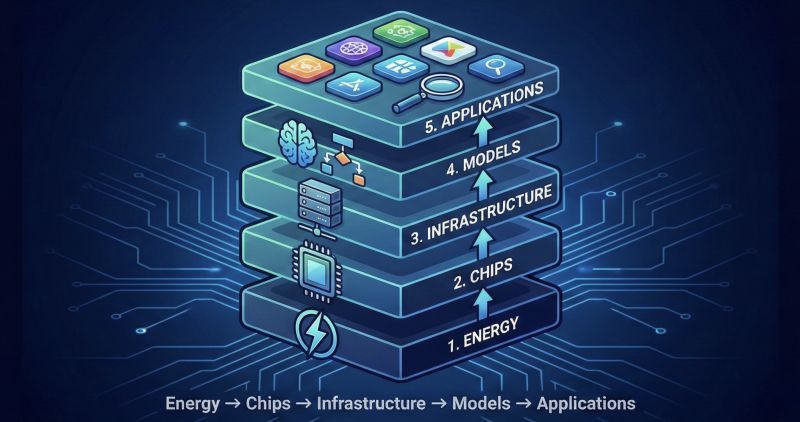
The AI stack, from energy to applications.
Leading open-weight model families (as of October 2026)
Model
Developer
Parameters (total / active)
Context
License
Strength
Gemma 4 31B
Google
31B dense
256K
Apache 2.0
Single-GPU and air-gapped deployments
Qwen3.5-397B-A17B
Alibaba Qwen
397B / 17B MoE
262K
Apache 2.0
Multilingual, coding, general assistant
Llama 4 Maverick
Meta
400B / 17B MoE
1M
Llama 4 Community
Long-context enterprise chat
Mistral Large 3
Mistral AI
675B / 41B MoE
256K
Apache 2.0
EU-sovereign, multimodal general use
GLM-5.2
Z.ai
744B / 40B MoE
1M
MIT
Agentic coding, long-horizon tasks
Kimi K2.6
Moonshot AI
1T / 32B MoE
256K
Modified MIT
Agentic coding, tool use, multimodal input
DeepSeek V4 Pro
DeepSeek
1.6T / 49B MoE
1M
MIT
Reasoning, coding, agents
Open-weight does not always mean open-source: licenses differ, and some restrict commercial use at scale. New versions ship monthly, so we confirm the current release and license during each engagement.
Will it fit on one 8-GPU server?
Minimum GPUs needed just to hold each model's weights at FP8 (about 1 GB per billion parameters, plus 20% headroom). Real deployments add room for the KV cache and round up to 2, 4 or 8 GPUs.
Minimum GPUs needed to hold the model weights at FP8
Model (FP8 weights + 20%)
MI325X256 GB
MI350P144 GB
MI355X288 GB
H200141 GB
RTX PRO 600096 GB
B200180 GB
B300288 GB
Gemma 4 31B≈37 GB
1
1
1
1
1
1
1
Qwen3.5-397B-A17B≈476 GB
2
4
2
4
5
3
2
Llama 4 Maverick≈480 GB
2
4
2
4
5
3
2
Mistral Large 3≈810 GB
4
6
3
6
9
5
3
GLM-5.2≈893 GB
4
7
4
7
10
5
4
Kimi K2.6≈1,200 GB
5
9
5
9
13
7
5
DeepSeek V4 Pro≈1,920 GB
8
14
7
14
20
11
7
Fits on one 8-GPU serverNeeds more than one server
RAICOSOL estimate for planning only. FP4 roughly halves the weight footprint; long context and high concurrency increase the KV-cache requirement.
Network architecture
The network is part of the computer.
Distributed training exchanges gradients after every step. Across a million steps, each extra second of network delay can add more than ten days of idle compute. Power availability and data-sovereignty rules are also spreading AI capacity across more sites.
We design all three tiers together, from the top-of-rack switch to the links between data centers.
Three network tiers, each with its own bandwidth, latency and cost profile.
Leaf-spine (Clos) fabric: every top-of-rack switch connects to every spine, giving equal-cost paths between any two servers. We size port counts, oversubscription and optics for the GPU fabric and the front-end network separately.
How we engage
From requirements to a bill of materials you can finance.
01
Discover
Models, users, latency targets, data residency, budget and timeline.
02
Size
GPU platform and count, CPU and memory per node, storage tiers and fabric.
03
Validate
Benchmarks on candidate hardware against your models and SLAs.
04
Integrate
Rack elevations, power and cooling, top-of-rack design and OEM sourcing.
Architecture briefGPU platform recommendationBill of materialsRack and power planNetwork designTCO model: buy vs. lease vs. cloud
Get an architecture review before you buy.
Tell us the models and the scale. We will come back with a sized design, options across vendors, and the cost to own or lease it.