RAICOSOL, Reliable AI Controls and Solutions Find capacity

Home / Solutions / Colocation Services

03 · Colocation Services

Capacity is a power question.

GPUs ship in weeks. Megawatts can take years. RAICOSOL finds the space and power your AI roadmap needs: colocation you can move into now, IT-ready infrastructure, and greenfield sites of 25 MW and above for the next phase.

The power gap

Demand is doubling. The grid is not.

Grid expansion has not kept pace with new data center demand. Transmission lines are fully subscribed in key markets, high-voltage equipment has long lead times, and even self-supply now waits in line for generation equipment.

Global data center electricity demand

Terawatt-hours per year · IEA estimate and forecast

485 terawatt-hours in 2025, rising to about 950 terawatt-hours by 2030. 2025: 485 TWh4852025 2030: ~950 TWh~9502030 ≈2×

What projects are waiting on

Lead times reported by power equipment makers and operators

  • 5 yrsQuoted wait for utility power at one southeast U.S. site, including equipment lead times
  • 36+ moSupply-chain lead time for some high-voltage and power equipment
  • 3+ yrsLead time for new large gas turbines; one maker is booking slots for 2031
  • < 2 yrsWhat most data center power projects need, which is why on-site and bridge power are rising

Three paths to capacity

Move in now, scale next, own the long term.

Most AI programs need more than one answer. We combine near-term colocation with a pipeline of larger sites, so your first cluster goes live while the next phase is being energized.

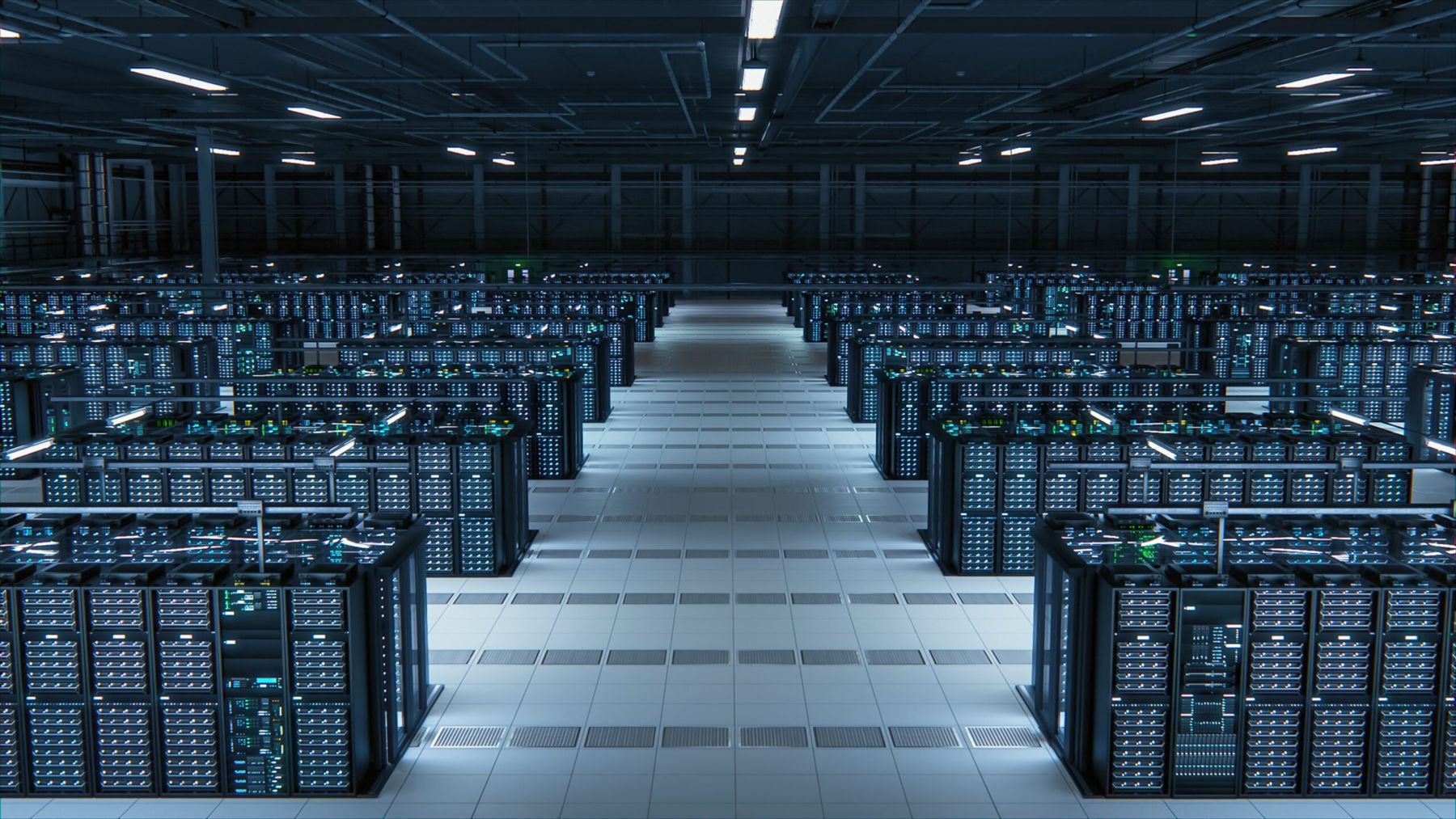
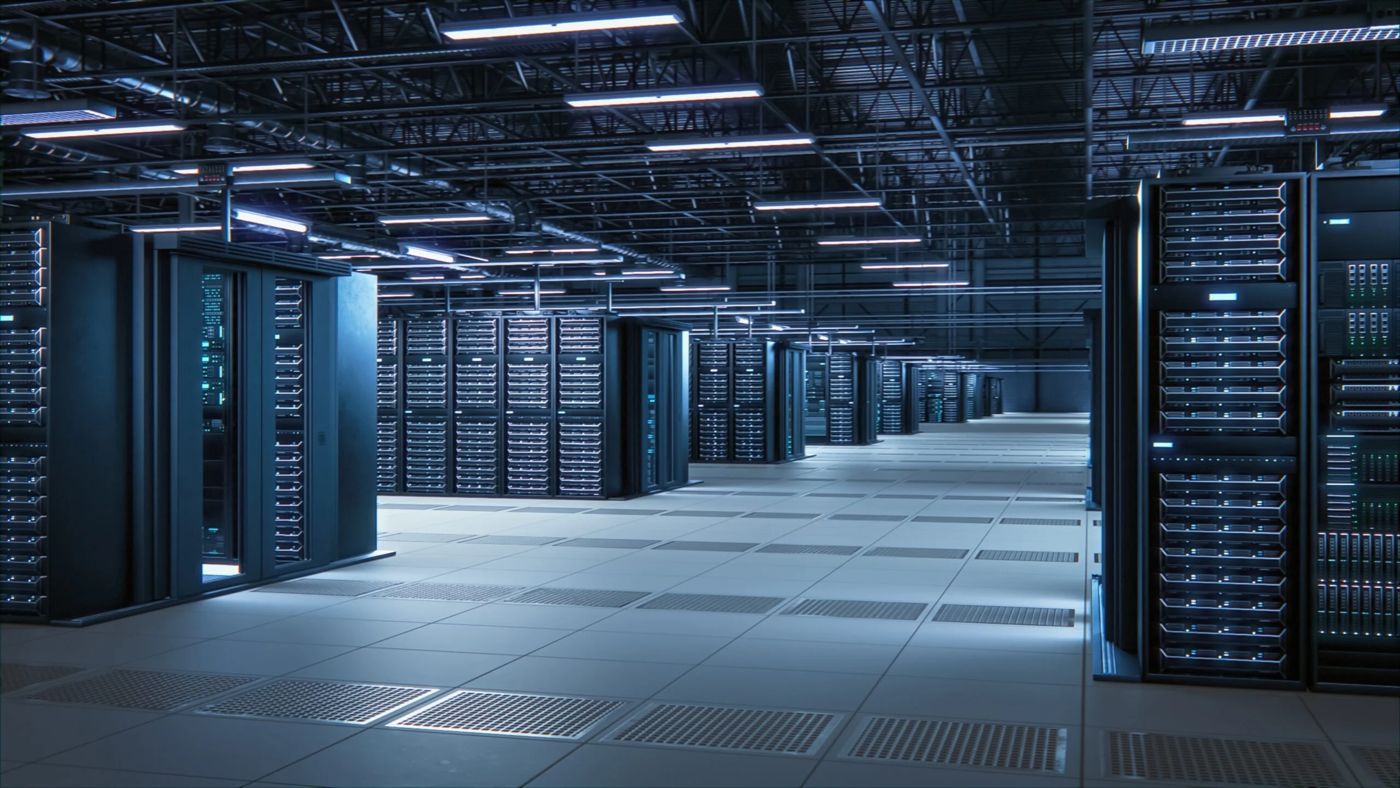
Colocation data hall with rows of server racks
PATH 01

Colocation

Private suites and cages in Tier III-class facilities, with power, cooling and connectivity already in place.

Weeks–monthsTime to live
100 kW–5 MWTypical block
OpExModel
  • First clusters, pilots and inference capacity
  • Density, cooling and interconnect checked against your racks
  • Pricing per kW benchmarked across markets
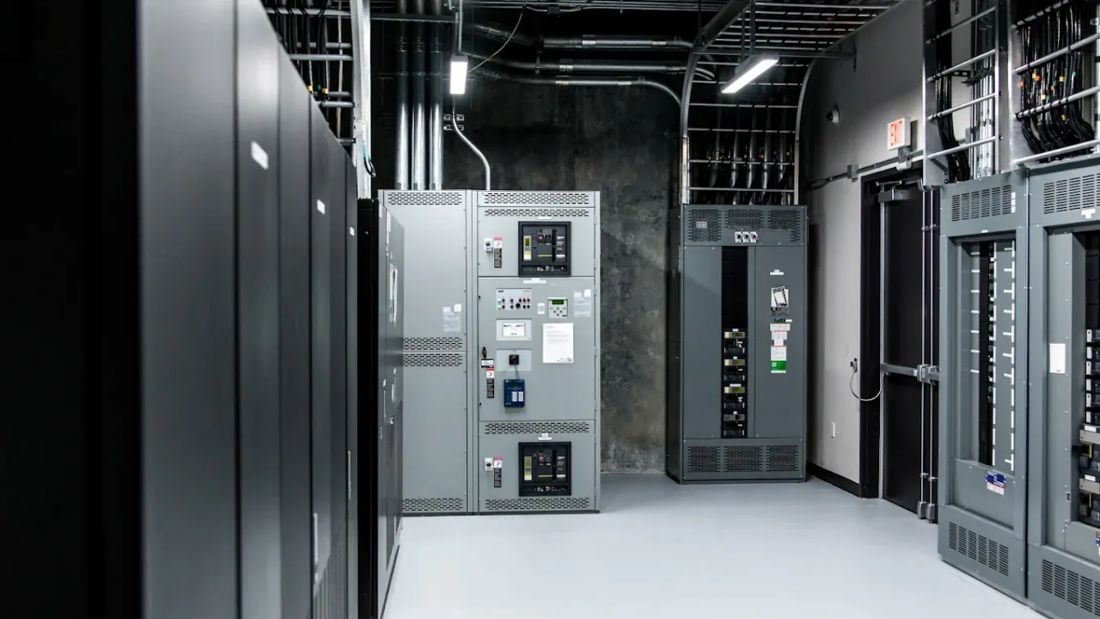
Electrical room with switchgear and power distribution
PATH 02

IT-ready infrastructure

Powered shells and halls with switchgear, UPS and cooling installed or under way, ready to fit out for AI density.

6–18 moTime to live
5–25 MWTypical block
Lease or JVModel
  • Dedicated capacity without a full build
  • Liquid-cooling retrofit and 800 VDC readiness assessed
  • Expansion rights negotiated up front
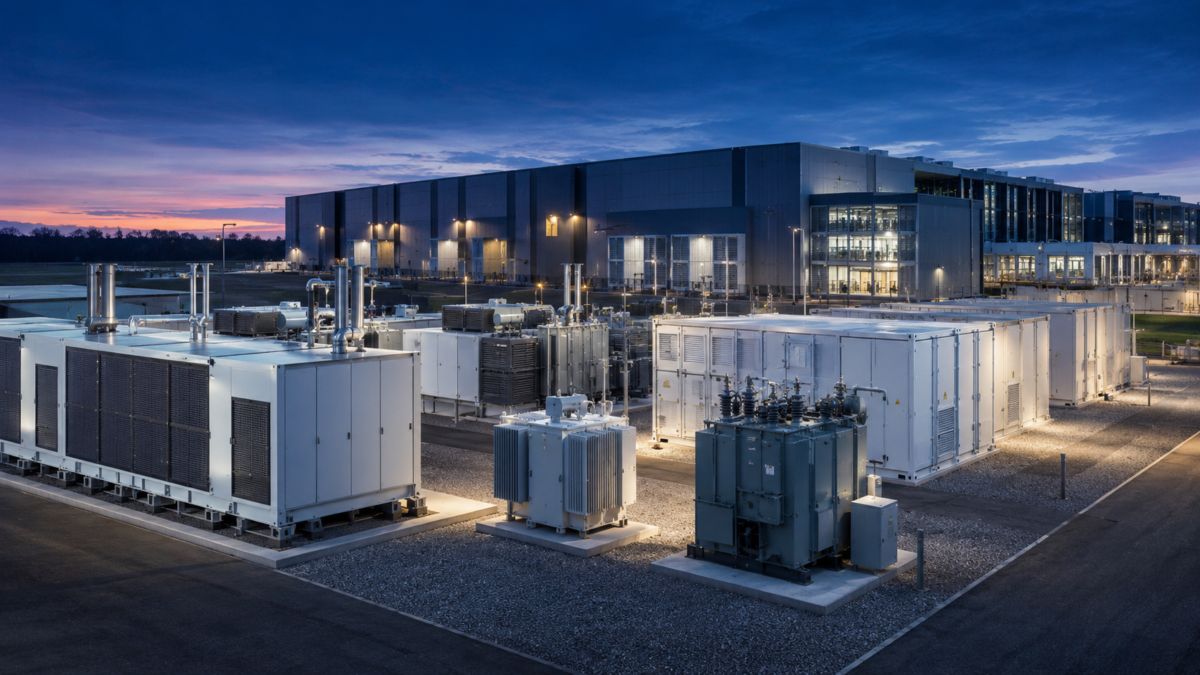
Data center campus with transformers and on-site power equipment at dusk
PATH 03

Greenfield, 25 MW+

Land with a credible path to power for purpose-built AI campuses, from 25 MW to hundreds of megawatts.

18–36+ moTime to live
25 MW+Scale
Build or BTSModel
  • Sites screened for power, fiber, water and permits
  • Utility, on-site generation and storage options
  • Phased energization so revenue starts early

Timelines and block sizes are typical ranges for planning; actual figures depend on market, utility and equipment availability.

Rack density

AI changed what a rack needs.

AI racks draw many times the power of traditional IT, and their load can swing by megawatts in seconds. That changes power distribution, cooling and which buildings can host the cluster at all.

PCIe inference server~5 kW+

Eight 600 W accelerator cards alone draw 4.8 kW; often fits air-cooled colocation.

AI racks today200–300 kW

Direct-to-chip liquid cooling and heavier power distribution become standard.

Next generation~600 kW

Above about 400 kW per rack, purpose-built infrastructure is typically needed.

On the roadmap1 MW

800 VDC distribution and sidecar power racks move conversion out of the IT rack.

Sources: Eaton and Schneider Electric; PCIe example from AMD Instinct MI350P board power. Bars are indicative, relative to 1 MW.

Grid to chip

Every link in the power chain has a lead time.

From the utility intake to the GPU, each stage must be sized for AI loads that ramp from near-idle to full power in milliseconds. Grid-interactive UPS, supercapacitors and battery storage smooth those swings, and power and cooling must be designed together.

We map the full chain for each site, identify the long-lead items, and line up suppliers early.

Utility gridHV TRANSMISSION On-site generationGAS · SOLAR · FUEL CELLS Substation & medium-voltage switchgear Transformers · low-voltage distribution UPS · grid-interactive BESS · supercaps Busway / 800 VDC sidecar AI rack · 200 kW → 1 MW Liquid cooling
Simplified grid-to-chip chain. Long-lead items sit at the top: transmission, substations, transformers and generation.

Site selection

What we check before you commit.

A site is only as good as its path to power. We screen every option against the same criteria, so you can compare a colocation suite, a powered shell and a greenfield parcel on equal terms.

Switchgear and power distribution equipment
01

Power availability and timeline

Capacity today, committed upgrades, interconnection queue position and realistic energization dates.

02

On-site and bridge power

Room and permits for generation, battery storage and phased energization while the grid catches up.

03

Density and cooling

Supported kW per rack, liquid-cooling readiness, water availability and heat rejection.

04

Connectivity

Diverse fiber routes, carrier options and latency to users and to your other sites.

05

Land, zoning and permits

Entitlements, environmental review, community engagement and construction schedule risk.

06

Cost and incentives

Energy tariffs, large-load rate structures, tax incentives and total cost per kW over the term.

07

Resilience and reliability

Tier rating, redundancy, natural-hazard exposure and the operator's track record.

08

Sovereignty and compliance

Data residency, export rules and the jurisdiction your customers require.

Speed to power

Strategies to energize sooner.

When the grid cannot deliver on your timeline, there are proven ways to bring capacity online in phases, and to become a better neighbor on the grid at the same time.

Bridge power

Trailer-mounted turbines and generators can be installed and running faster than a permanent plant, covering the gap until grid power arrives.

Behind-the-meter generation

A dedicated plant supplies the campus directly; longer term it can combine solar, wind, storage, fuel cells and hydrogen-ready turbines.

Battery storage

Batteries buffer AI load swings, provide backup, and can support the grid with peak shaving and frequency response.

Flexible connection

Agreeing to trim load briefly during grid peaks can unlock capacity sooner. One study estimates U.S. grids could absorb 76 GW of new large loads this way.

Policy watch

The rules for large loads are changing fast.

Regulators are rewriting how data centers connect, share power with generators and support the grid. These rules shape which sites are viable and on what terms.

U.S. · Dec 2025

FERC and PJM

FERC directed PJM to create rules for large loads co-located with generation, including transmission-service terms.

Texas · Jul 2026

Emergency curtailment

A data center sharing a connection with a power plant may have to shut down during a grid emergency.

Ireland · Dec 2025

Bring your own power

New data centers must provide on-site or nearby generation or storage, and match most demand with new renewables.

U.S. DOE

Federal sites and grid upgrades

Federal land is being evaluated for AI data centers and energy projects, alongside funding to expand transmission capacity.

Texas · Real estate licensing

Does Texas real estate licensing apply to colocation services?

Texas real estate licensing does not generally apply to colocation services (such as renting server space, racks, or IT infrastructure in a data center) because colocation agreements are commercial service and technology contracts rather than real property leases or real estate brokerage transactions.

Why Colocation Services Generally Fall Outside Real Estate Licensing

  • Nature of the Agreement: Colocation involves licensing space, power, cooling, and network connectivity for computing hardware rather than transferring an interest in real estate.
  • Scope of TRELA: Under Chapter 1101 of the Texas Occupations Code (The Real Estate License Act), a real estate license is only required when a person negotiates or assists with the sale, purchase, exchange, or lease of real estate for another person in exchange for compensation.
  • Commercial Real Estate Overlap: While the underlying land or building of a data center is real property (and corporate real estate managers or commercial agents leasing a whole facility typically hold a Texas Real Estate License), selling or managing individual IT colocation or rack space slots does not constitute real estate brokerage.

Summaries for orientation only, not legal advice. We confirm current rules for each market during site diligence.

How we engage

From megawatt requirement to signed capacity.

01

Define

MW needed by phase, rack density, cooling, location and latency constraints, and budget per kW.

02

Source

Shortlist colocation, IT-ready and greenfield options from our operator and landowner network.

03

Diligence

Power path, utility engagement, technical fit, permits and commercial terms for each option.

04

Secure

Negotiate terms and expansion rights, then coordinate fit-out with power, cooling and construction partners.

Site shortlistPower path assessmentDensity and cooling fitCost per kW comparisonPhasing planTerm sheet support

Need capacity, or have it?

I need space and power

Tell us the megawatts, timeline, density and region. We will come back with options across colocation, IT-ready and greenfield.

Request capacity

I have a site or capacity

Data center operators, landowners and utilities: list available capacity or powered land with RAICOSOL to reach AI buyers.

List your site

ai@raicosol.com · +1 (713) 294-4180

Sources

  1. World Economic Forum: AI data centres and electricity supply
  2. U.S. DOE: Data center resource hub
  3. Siemens Energy: Powering AI data centers
  4. Eaton: Managing AI power requirements
  5. Schneider Electric: AI factory power
  6. AMD Instinct MI350P specifications

Product names and trademarks belong to their owners. RAICOSOL is vendor-neutral and is not affiliated with the companies referenced.